
A roof usually leaks because water has found a way past the shingles — most often through failed flashing, a cracked or missing shingle, a clogged valley, or an aging seal around a vent, pipe, or chimney. The tricky part: the wet spot on your ceiling is often several feet from where the water actually gets in, because water travels along the underside of the roof deck before it drips.
The most common causes of a roof leak
In Middle Tennessee, the leaks we trace back with a drone almost always come down to a short list:
Flashing failures. The metal that seals the joints around chimneys, walls, valleys, and skylights is the single most common leak source — industry groups like the NRCA consistently point to flashing as a top culprit. When it lifts, rusts, or was installed poorly, water walks right in.
Cracked, curled, or missing shingles. Wind and hail (a regular event here) tear or loosen shingles, exposing the underlayment and deck. Even one missing shingle in the wrong spot leaks.
Worn pipe boots and penetration seals. The rubber boots around plumbing vents dry out and crack — usually within 10–15 years — and become a classic, easy-to-miss leak point.
Clogged or failing valleys and gutters. Where two roof planes meet, debris and overflowing gutters back water up under the shingles, especially in heavy Tennessee downpours.
Simple age. Asphalt shingles lose their protective granules over time; past about 20–25 years, the whole roof becomes porous and starts leaking in multiple places at once.
Why the leak inside isn’t where the roof is failing
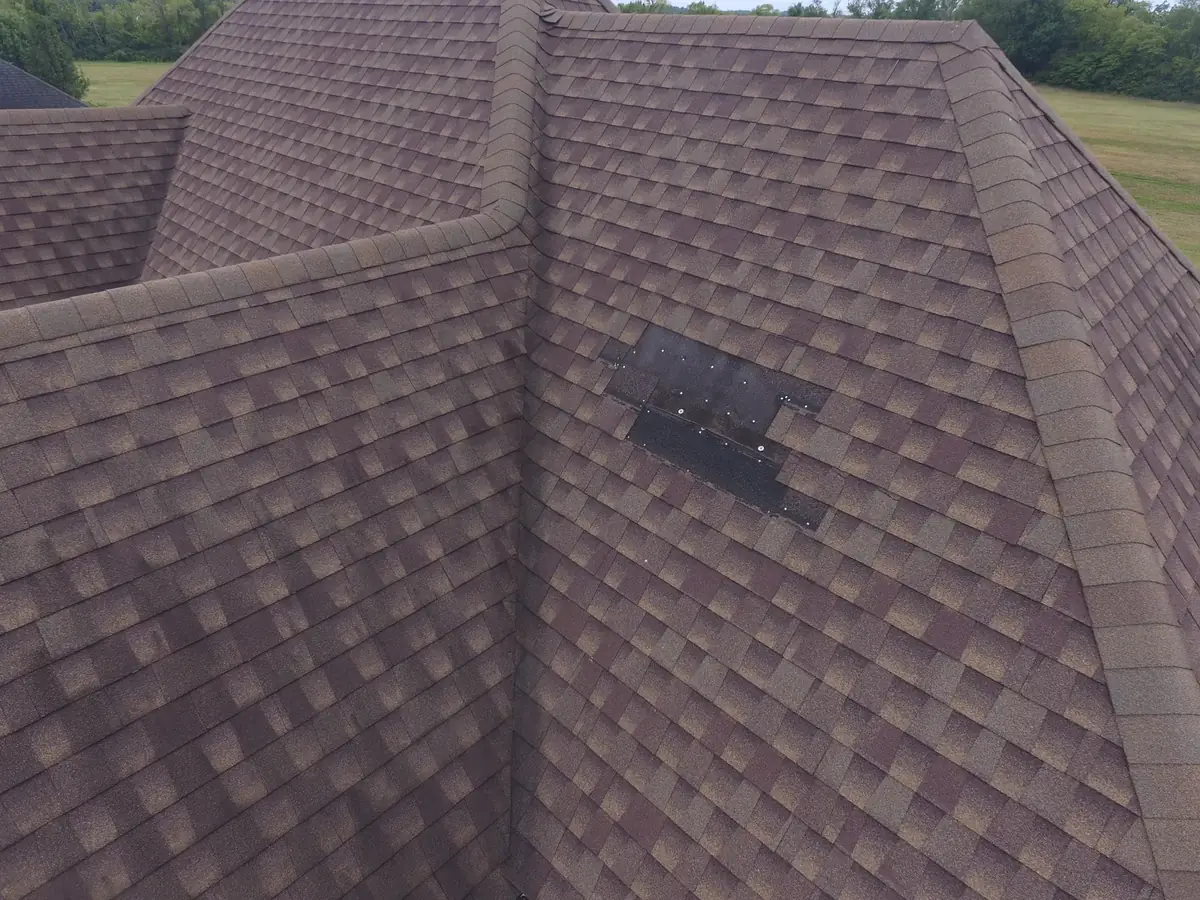
This is the part that fools most homeowners. Water enters at a high point — a lifted flashing, say — then runs down the underside of the roof deck until it hits a seam or a nail and drips. By the time it stains your ceiling, it can be 3–10 feet from the real entry point. That’s why “just patch the spot above the stain” so often fails: the stain isn’t above the hole.
How to find the source of a roof leak
A safe, methodical way to track it down:
1. Start in the attic, in daylight. With the lights off, look for pinpoints of daylight or dark water staining on the underside of the deck and rafters. Trace stains uphill — water runs down, so the true entry is always higher than the wet wood.
2. Check the obvious suspects. Follow the trail toward the nearest penetration, valley, or wall — that’s where flashing and boots live.
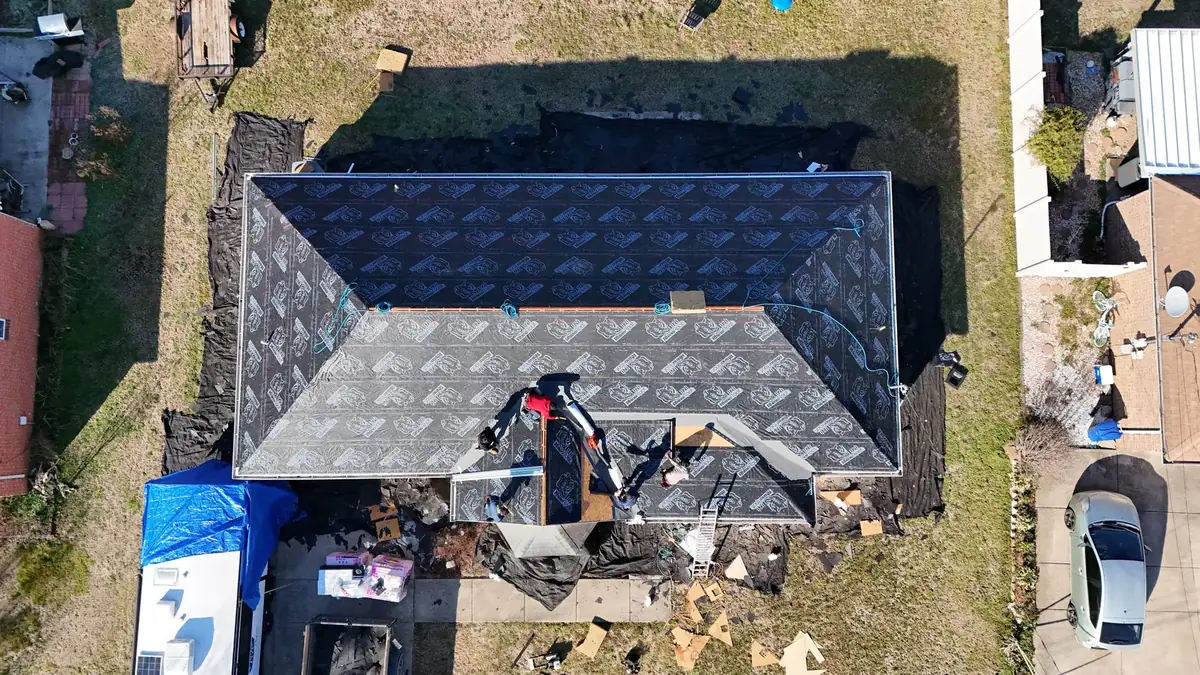
3. Get eyes on the roof safely. This is where our FAA Part 107 drone inspection earns its keep: we photograph every plane, valley, and flashing detail from above — no one walking your roof, and nothing missed — and hand you a written report showing exactly where the failure is.
What to do right now if your roof is leaking
Contain it — move belongings, put down a bucket, and if the ceiling is bulging from trapped water, a small relief hole into a bucket prevents a larger collapse. Document it with photos and dates for a possible insurance claim. Stay off the roof — a wet roof is dangerous, and walking it can turn one leak into several. For more on the claim side, see our guide on reading your roof insurance claim.
When to call a pro
Call a roofer if the leak is active, recurring, tied to a storm, or you simply can’t find the source. A real inspection finds the actual entry point — not just the stain — and tells you honestly whether it’s a targeted leak repair, a broader roof repair, or, for an aging roof, a replacement. If a recent storm is the likely cause, our storm & hail damage documentation supports your claim.
Ready for a Roof You Can Trust?
Get your free, no-obligation drone roof inspection — from a roofer rated 5.0 by 90+ Google reviews.