
If an estimate just says “replace roof” for one lump sum, you do not actually know what you are buying. A shingle roof is a system — a dozen components that each do a job, and several that the building code requires whether the salesperson mentions them or not. Here is the whole stack, from the deck up.
What are the parts of a roof, in order?
A complete asphalt-shingle system is: roof deck, underlayment, ice-and-water barrier where needed, drip edge, starter strip, field shingles, flashing at every transition, ridge cap, and a balanced ventilation system — all held down by code-rated fasteners. A real estimate names these pieces. Below is what each one does and where the code has something to say.
1. The deck (sheathing)
Everything is nailed to the deck — usually plywood or OSB. Old roofs sometimes sat on board decking; some shingle manufacturers will not warranty installation over wide gaps, which can trigger a re-deck. Rotten or delaminated decking is a real, common extra, so ask up front: “What do you charge per sheet for bad decking, and is it in the price or added later?”
2. Underlayment
The water-resistant layer over the deck. Synthetic underlayment has largely replaced felt; both are governed by ASTM standards and required by code (IRC R905.1.1). Synthetic lays flatter, resists tearing, and is the modern default — a “felt vs. synthetic” line is worth asking about.
3. Ice-and-water barrier
A self-adhered membrane (ASTM D1970) that seals around nails. The IRC requires an ice barrier only where the average January temperature is roughly 25°F or lower (IRC R905.1.2) — most of Middle Tennessee falls outside that mandatory zone. That is the honest answer. But it is still strong practice (and often a manufacturer requirement) to run it in valleys and around penetrations, where most leaks actually start. If an estimate includes it there, that is a quality signal, not padding.
4. Drip edge
Metal edging that directs water off the deck and into the gutter instead of behind the fascia. This one is not optional: the IRC requires a drip edge at both the eaves and the rake edges (IRC R905.2.8.5, in the code since 2012). If a bid leaves drip edge off, it is leaving off a code-required component.
5. Starter strip and ridge cap
Purpose-made starter shingles lock down the first course and protect the eaves and rakes against wind uplift; ridge cap finishes the peaks and hips. Cutting up field shingles to fake these is a corner-cut that can void the wind warranty. A real estimate lists genuine starter and ridge-cap products.
6. Flashing — the part that actually keeps you dry
Step flashing, counter flashing, chimney flashing, valley metal, and pipe boots seal every place the roof meets a wall, chimney, valley, or penetration. There is a saying in the trade for a reason: a roof is only as good as its flashing. A crew that can run a metal brake on site can fabricate custom flashing for odd chimneys, walls, and rake details instead of caulking over a poor fit — ask whether flashing is being replaced or just reused.
7. Ventilation
Intake (soffit) and exhaust (ridge or box) vents move heat and moisture out of the attic. The IRC sets a minimum net free ventilating area — generally 1/150 of the attic floor, reducible to 1/300 when the system is balanced and other conditions are met (IRC R806). Poor ventilation cooks shingles from below, shortens roof life, and many manufacturers will not honor a warranty if ventilation was inadequate at installation. A good estimate addresses intake and exhaust as a balanced system, not an afterthought.
8. Fasteners, cleanup, and disposal
Code-rated nails of the correct length and placement matter (IRC R905.2.5), and some premium shingles must be hand-nailed per the manufacturer or the warranty is void. Finally, tear-off disposal (the dumpster/dump fee) and a thorough magnet sweep for nails are legitimate line items — not hidden surprises.
How do I use this when comparing bids?
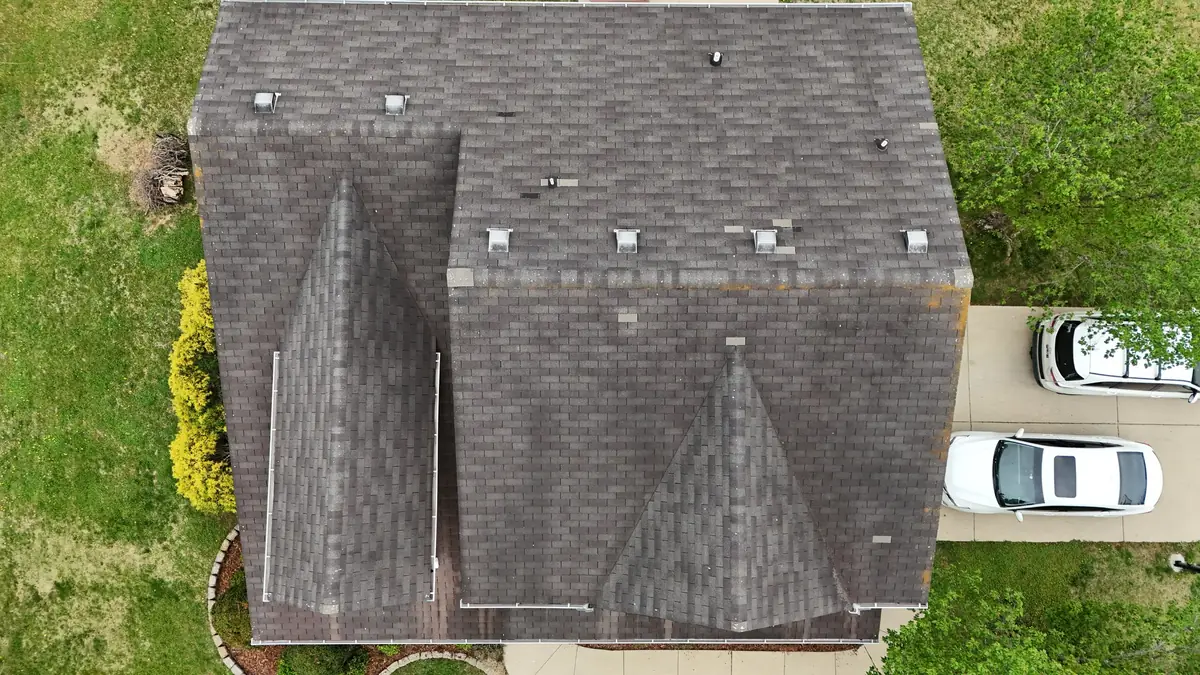
Lay two estimates side by side and check each line above. The cheaper bid is not cheaper if it dropped the drip edge, reused old flashing, faked the starter and ridge cap, or ignored ventilation. To compare apples to apples on price, pair this list with our guides on reading a roofing estimate and cost per square, and sanity-check the total with the roof cost calculator.
Frequently asked questions
Is a drip edge really required by code?
Yes — the IRC requires drip edge at eaves and rake edges (R905.2.8.5), and it has been in the code since 2012. Local adoption can vary, so confirm with your building official, but leaving it off is leaving off a code component.
Do I need ice-and-water shield in Middle Tennessee?
The code does not mandate a full eave ice barrier in most of Middle TN (the January-temperature trigger in IRC R905.1.2 generally is not met here). It is still smart to use it in valleys and around penetrations, where leaks begin, and it may be required by the shingle manufacturer.
What is the most-skipped component?
In our experience it is proper flashing and genuine starter/ridge-cap product — the pieces a homeowner cannot easily see from the ground.
The honest takeaway
You do not have to be a roofer. You just have to know the parts have names — and ask for them by name. When you are ready, we will give you a line-item estimate that lists the whole system, so nothing is hiding in a lump sum.
Sources & standards referenced
- International Residential Code (IRC) — R905.2.8.5 (drip edge), R905.1.1 (underlayment), R905.1.2 (ice barrier), R905.2.5 (fasteners), R806 (attic ventilation): ICC Digital Codes. Editions and local amendments vary — confirm with your county building official.
- ASTM standards for roofing materials (e.g. D1970 self-adhered ice-and-water underlayment): astm.org.
- National Roofing Contractors Association (NRCA Roofing Manual — installation best practice): nrca.net.
This guide is homeowner education, not legal advice. Verify current code editions, local amendments, and permit requirements with your local building official before relying on any code reference.